Books Bob Dylan Digs, Part Two: ‘Balzac says pure materialism is a recipe for madness’

A few days ago I did a post about books Dylan has read and appreciated. There was a lot of interest, and I thought readers would be interested in a second post with more Dylan faves.

These books are either featured on Dylan’s website, or he talks about them in his memoir, Chronicles: Volume One.
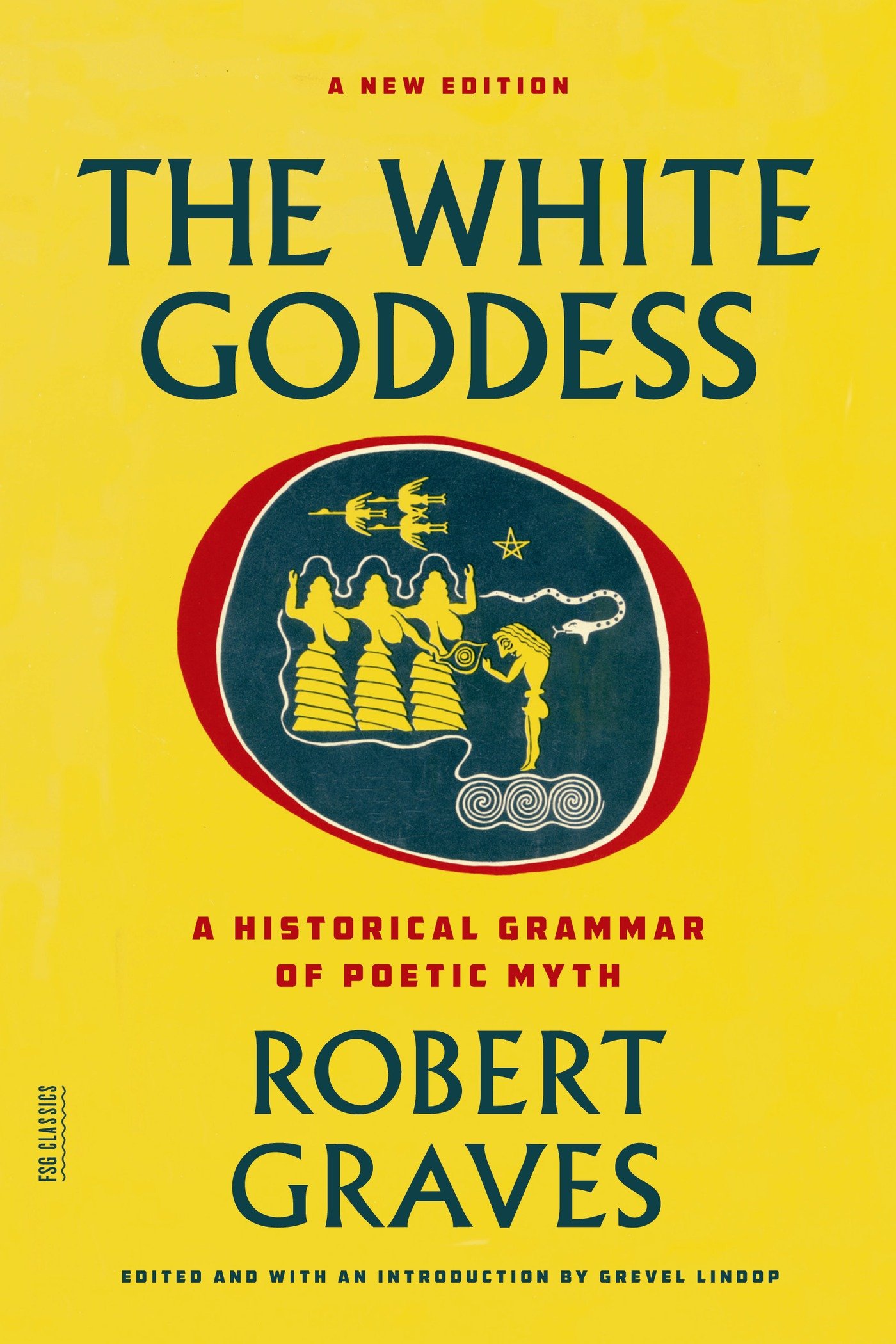
1 The White Goddess by Robert Graves

Bob Dylan in Chronicles: Invoking the poetic muse was something I didn’t know about yet. Didn’t know enough to start trouble with it, anyway. In a few years’ time I would meet Robert Graves himself in London. We went for a brisk walk around Paddington Square. I wanted to ask him about some of the things in his book, but I couldn’t remember much about it.

2 The Land Where the Blues Began by Alan Lomax

From Publishers Weekly (via Bob Dylan’s website):

Working for the Library of Congress and other cultural institutions, legendary roots-music connoisseur Lomax ( Mister Jelly Roll ) visited the Mississippi Delta with his father, folklorist John Lomax, and black folklorist Zora Neale Hurston in the 1930s; with African American sociologists from Fiske University in the 1940s; and with a PBS film crew in the 1980s, researching the history of the blues in America. Addressing this wonderfully rich vein of scarcely acknowledged Americana, Lomax has written a marvelous appreciation of a region, its people and their music. Burdened early with now long-forgotten technology (500-pound recording machines, etc.) and encountering pronounced racial biases and cultural suspicions about black and white people mixing socially and otherwise, Lomax sought out those in the Delta who knew Robert Johnson and Charlie Patton and others acquainted with musicians once less well known, such as Doc Reese, young McKinley Morganfield (Muddy Waters), Dave Edwards, Eugene Powell and Sam Chatmon. Traveling across the South “from the Brazos bottoms of Texas to the tidewater country of Virginia,” Lomax discovers the plantations, levee camps, prisons and railroad yards where the men and women of the blues came from and the music was born. In a memoir that will take its place as an American classic, Lomax records not just his recollections but the voices of hard-working, frequently hard-drinking, spiritual people that otherwise might have been lost to readers.

3 The Blues Line by Eric Sackheim, editor

From Bob Dylan’s website:

Transcribed from 78 rpm recordings and preserved here long after many of the records have disappeared, this collection of nearly three hundred songs from more than one hundred singers celebrates the diversity of feeling and form that defines the blues. Ma Rainey, Blind Lemon Jefferson, Bessie Smith, Leadbelly, Memphis Minnie, Robert Johnson, and Muddy Waters are represented with their lesser-known contemporaries—Barefoot Bill, Barbecue Bob, Bumble Bee Slim, and Black Ivory King. This complete anthology also features lyrics by Blind Blake, Victoria Spivey, Blind Willie Johnson, “Funny Paper” Smith, Texas Alexander, Lightning Hopkins, Mance Lipscomb, Ma Yancey, King Solomon Hill, Skip James, Arthur “Big Boy” Crudup, Son House, Willie Brown, Mississippi John Hurt, Bukka White, Furry Lewis, Sleepy John Estes, Rev. Gary Davis, Roosevelt Sykes, Peetie Wheatstraw, Sonny Boy Williamson, Kokomo Arnold, Tampa Red, Howlin’Wolf, John Lee Hooker, Charlie Patton, and more than 100 others. Dozens of illustrations by Jonathan Shahn are included.

4 Ringolevio: A Life Played for Keeps by Emmett Grogan

From Bob Dylan’s website:

Ringolevio is a classic American story of self-invention by one of the more mysterious and alluring figures to emerge in the 1960s. Emmett Grogan grew up on New York City’s mean streets, getting hooked on heroin before he was in his teens, kicking the habit and winning a scholarship to a swanky Manhattan private school, pursuing a highly profitable sideline as a Park Avenue burglar, then skipping town to enjoy the dolce vita in Italy. It’s a hard-boiled, sometimes hard-to-believe, wildly entertaining tale that takes a totally unexpected turn when Grogan washes up in sixties San Francisco and becomes a leader of the anarchist group known as the Diggers. The Diggers, devoted to street theater, direct action, and distributing free food, were in the thick of the legendary Summer of Love, and soon Grogan is struggling with the naive narcissism of the hippies, the marketing of revolution as a brand, dogmatic radicals, and false prophets like tripster Timothy Leary. Above all, however, he struggles with himself.

Ringolevio is an enigmatic portrait of a man and his times to set beside Hunter S. Thompson’s stories of fear and loathing, Norman Mailer’s The Armies of the Night, or the recent Chronicles of Bob Dylan, who dedicated his 1978 album Street Legal to the memory of Emmett Grogan.

5 Luck and Leather by Honore de Balzac

6 Le Cousin Pons by Honore de Balzac

Bob Dylan in Chronicles: I liked the French writer Balzac a log… Balzac was pretty funny. His philosophy is plain and simple, says basically that pure materialism is a recipe for madness. The only true knowledge for Balzac seems to be in superstition. Everything is subject to analysis. Horde your energy. That’s the secret of life. You can learn a lot form Mr.B. It’s funny to have him as a companion. He wears a monk’s robe and drinks endless cups of coffee. Too much sleep clogs up his mind. One of his teeth falls out, and he says, “What does this mean?” He questions everything. His clothes catch fire on a candle. He wonders if fire is a good sign. Balzac is hilarious.

7 Kaddish and Other Poems by Allen Ginsberg

From Dylan’s website: Allen Ginsberg’s epic poem inspired by the death in 1956 of his mother Naomi.

Dylan said in 1965: I came out of the wilderness and just naturally fell in with the Beat scene, the bohemian, Be Bop crowd, it was all pretty much connected. It was Jack Kerouac, Ginsberg, Corso, Ferlinghetti … I got in at the tail end of that and it was magic … it had just as big an impact on me as Elvis Presley.
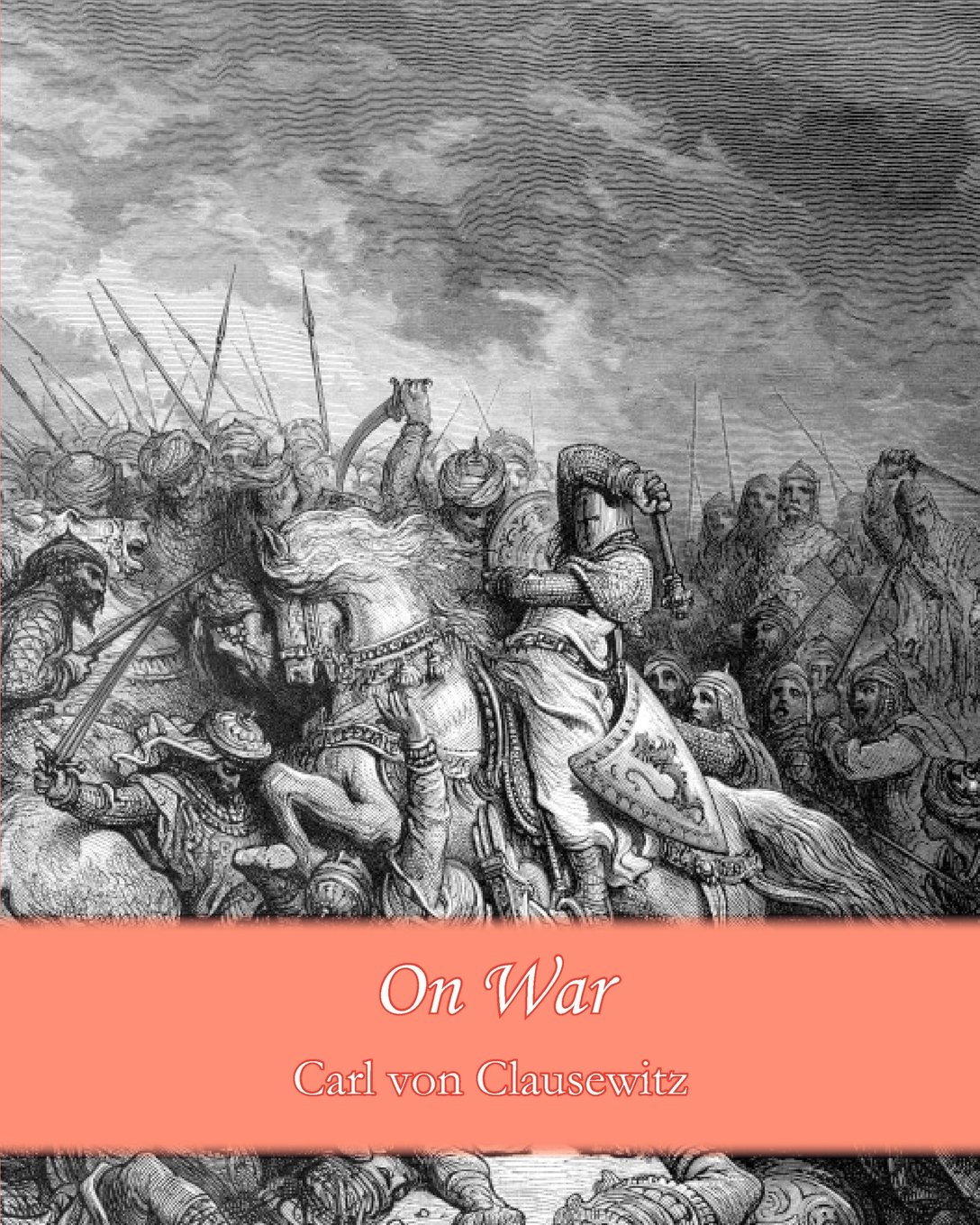
8 On War by Carl Von Clausewitz

From Bob Dylan’s website: Bob Dylan mentions Clausewitz on pages 41 and 45 of his Chronicles: Volume One, saying he had “a morbid fascination with this stuff,” that “Clausewitz in some ways is a prophet” and reading Clausewitz can make you “take your own thoughts a little less seriously.” Dylan says that Vom Kriege was one of the books he looked through among those he found in his friend’s personal library as a young man playing at The Gaslight Cafe in Greenwich Village.
9 Don Juan by Lord Byron

Bob Dylan in Chronicles: I had broken myself of the habit of thinking in short song cycles and began reading longer and longer poems to see if I could remember anything I read about in the beginning. I trained my mind to do this, had cast off gloomy habits and learned to settle myself down. I read all of Lord Byron’s Don Juan, and concentrated fully from start to finish.

10 Honkers and Shouters: The Golden Years of Rhythm and Blues by Arnold Shaw

From Bob Dylan’s website: “The best history of R&B and all its components ever published.”
—John Hammond

-– A Days of the Crazy-Wild blog post: sounds, visuals and/or news –
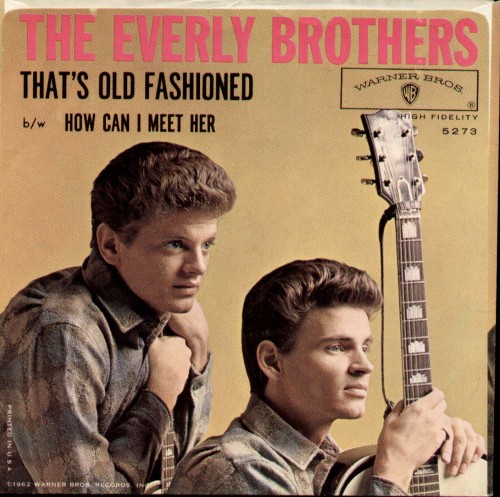
Watch: Everly Brothers BBC Documentary ‘Songs of Innocence and Experience’

“Songs of Innocence and Experience” (1984), is a BBC documentary on the Everly Brothers.

Thanks Aquarium Drunkard for hipping me to this!

-– A Days of the Crazy-Wild blog post: sounds, visuals and/or news –-

Audio: Bob Dylan Covers The Everly Brothers; The Everly Brothers Cover Bob Dylan

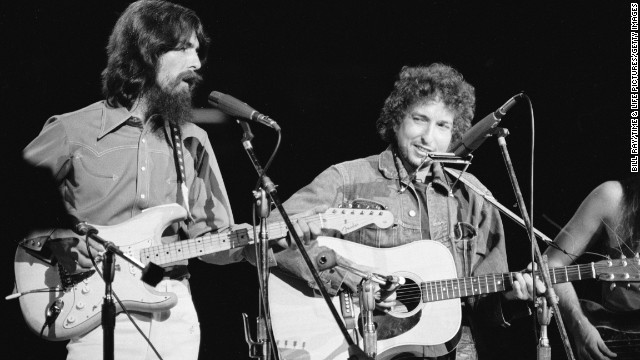
Photo via CNN.

Yesterday, following Phil Everly’s death, Harold Lepidus (at examiner.com) did a great post about songs by Bob Dylan that the Everly Brothers covered, and songs by the Everlys that Dylan covered.

Unfortunately, he only included audio of one of those songs.

So today I tracked down all of the audio and you can check it out below.

There’s a very cool, very loose version of “All I Can Do Is Dream” that Dylan sang while jamming with George Harrison in 1970, and a version of “Let It Be Me” off a B-side of the European “Heart Of Mine” single released in 1981).

Enjoy.

“The Everly Brothers, “Lay Lady Lay” off EB 84 (1984):

The Everly Brothers, “Abandoned Love” off Born Yesterday (1985):

Bob Dylan jamming with George Harrison (May 1, 1970), “All I Have To Do Is Dream”:

All I Have To Do Is Dream by Bob Dylan on Grooveshark

Bob Dylan, “Let It Be Me,” B side of “Heart Of Mine” European single (1981):

Bob Dylan and The Band, “All You Have To Do Is Dream” (a Basement Tapes reording possibly inspired by the Everly’s “All I Have To Do Is Dream”:

All You Have To Do Is Dream [Take 1] by Bob Dylan & The Band on Grooveshark

Plus in case you missed by Phil Everly obit yesterday, here are the Everly songs Bob Dylan included on Self Portrait:

Bob Dylan, “Let It Be Me”:

Let It Be Me by Bob Dylan on Grooveshark

Bob Dylan, “Take A Message To Mary”:

Take a Message to Mary by Bob Dylan on Grooveshark

-– A Days of the Crazy-Wild blog post: sounds, visuals and/or news –-

R.I.P. Dept.: Everly Brothers’ Phil Everly Dead at 74

Don (left) and Phil Everly.

Phil Everly, one of the great harmony singers in rock ‘n’ roll, and half of the legendary duo the Everly Brothers, died today in Burbank, CA. He was 74

His wife Patti Everly said the cause of death was complications from chronic obstructive pulmonary disease, according to the L.A. Times.

Phil Everly was a longtime smoker.

The peak of the duo’s popularity was in the late 1950s and early 1960s, when they charted nearly three dozen hits on the Billboard Hot 100 singles chart,including “Cathy’s Clown,” “Wake Up Little Susie,” “Bye Bye Love,” “When Will I Be Loved” and “All I Have to Do Is Dream.” The duo was among the first 10 performers inducted into the Rock and Roll Hall of Fame in 1986.

The Beatles once called themselves “the English Everly Brothers.” Bob Dylan, who covered two of their hits, “Let It Be Me” and “Take A Message To Mary” on Self Portrait, said of the duo, “We owe these guys everything. They started it all.”

In an obit at Rolling Stone’s website, David Browne wrote:

Harmony singing had been key in country and bluegrass, but starting with their first hit, 1957’s “Bye Bye Love,” the Everly Brothers brought the sound of deeply intertwined voices — and more than a hint of Appalachia — to rock & roll… The brothers’ close-knit harmonies were also a major influence on rock & roll, impacting on the Beatles, Simon & Garfunkel, the Mamas & the Papas, and many others.

Paul Simon on the Everly Brothers:

The roots of the Everly Brothers are very, very deep in the soil of American culture. First of all, you should know that the Everly Brothers were child stars. They had a radio show with their family, and their father, Ike, was an influential country guitar player, so he attracted other significant musicians to the Everlys’ world — among them Merle Travis and Chet Atkins, who was instrumental in getting the Everlys on the Grand Ole Opry. Perhaps even more powerfully than Elvis Presley, the Everly Brothers melded country with the emerging sound of Fifties rock & roll. They were exposed to extraordinary country-roots music, and so they brought with them the legacy of the great brother groups like the Delmore Brothers and the Blue Sky Boys into the Fifties, where they mingled with the other early rock pioneers and made history in the process.

Read more of Paul Simon’s comments here.

Chris Isaak said of the Everly Brothers last month: “They’re the best singers of all time, you know?”

John Fogerty and Bruce Springsteen covered the Everly’s “When Will I Be Loved” in 2009 for Fogerty’s album, The Blue Ridge Rangers (Ride Again).

In November 2013 Billie Joe Armstrong and Norah Jones released Foreverly, in which they covered the duo’s entire 1958 album Songs Our Daddy Taught Us.

The Everly harmonies “are so immaculate,” Armstrong told USA Today during an interview last year. “And that record [the duo’s second album, Songs Our Daddy Taught Us] was pretty daring at the time. A lot of other rock guys were trying to go pop. Chuck Berry had a string of big hits, and the same with Jerry Lee Lewis and Elvis. And here the Everlys were playing these torch songs and murder ballads. For them to do something so dark and angelic was appealing to me.”

Read Rolling Stone’s obit here.

The L.A. Times obit.

“Wake up little Susie” (1957):

“All I Have To Do Is Dream” (1958):

“Take A Message To Mary” (1958):

“Let It Be Me” (1959):

“Cathy’s Clown,” Saturday Night Beech-Nut Show. July 09, 1960:

John Lennon on piano singing “Cathy’s Clown,” and then The Beatles play a bit of “Cathy’s Clown” as well:

Bob Dylan, “Let It Be Me”:

Let It Be Me by Bob Dylan on Grooveshark

Bob Dylan, “Take A Message To Mary”:

Take a Message to Mary by Bob Dylan on Grooveshark

John Fogerty and Bruce Springsteen, “When WIll I Be Loved”:

Billy Joe Armstrong and Norah Jones, Foreverly — full album:

-– A Days of the Crazy-Wild blog post: sounds, visuals and/or news –-

Ten Books Bob Dylan Digs: ‘I went through it from cover to cover like a hurricane’

Bob Dylan reads, and over the years he’s read an eclectic mix of fiction and non-fiction. He’s name-dropped writers in his songs and in his interviews. “Ballad of a Thin Man” famously mentions F. Scott Fitzgerald:

You’ve been through all of,
F. Scott Fitzgerald’s books,
You’re very well read,
It’s well known.

Ballad of a Thin Man by Bob Dylan on Grooveshark

In “Stuck Inside of Mobile With The Memphis Blues Again,” he sings:

Well, Shakespeare, he’s in the alley,
With his pointed shoes and his bells,
Speaking to some French girl,
Who says she knows me well.”

Stuck Inside of Mobile With the Memphis Blues Again by Bob Dylan on Grooveshark

Dylan spends pages of his memoir “Chronicles” talking about books and authors.

Below I’ve listed ten books that Dylan has read and appreciated. Some are featured on his website, others he’s spoken about in interviews.

In some cases I’ve included text off Dylan’s website. In others there are quotes from Dylan about the book.

1 Bound For Glory by Woody Guthrie

Bob Dylan, in “Chronicles”: I went through it from cover to cover like a hurricane, totally focused on every word, and the book sang out to me like the radio. Guthrie writes like the whirlwind and you get tripped out on the sound of the words along. Pick up the book anywhere,turn to any page and he hits the ground running. “Bound for Glory” is a hell of a book. It’s huge. Almost too big.

2 The Conscience of the Folk Revival: The Writings of Israel “Izzy” Young by Scott Barretta

From Dylan’s website: Israel G. “Izzy” Young was the proprietor of the Folklore Center in Greenwich Village from the late 1950s to the early 1970s. The literal center of the New York folk music scene, the Center not only sold records, books, and guitar strings but served as a concert hall, meeting spot, and information kiosk for all folk scene events. Among Young’s first customers was Harry Belafonte; among his regular visitors were Alan Lomax and Pete Seeger. Shortly after his arrival in New York City in 1961, an unknown Bob Dyan banged away at songs on Young’s typewriter. Young would also stage Dylan’s first concert, as well as shows by Joni Mitchell, the Fugs, Emmylou Harris, and Tim Buckley, Doc Watson, Son House, and Mississippi John Hurt.

The Conscience of the Folk Revival: The Writings of Israel “Izzy” Young collects Young’s writing, from his regular column “Frets and Frails” for Sing Out! Magazine (1959-1969) to his commentaries on such contentious issues as copyright and commercialism. Also including his personal recollections of seminal figures, from Bob Dylan and Alan Lomax to Harry Smith and Woody Guthrie, this collection removes the rose tinting of past memoirs by offering Young’s detailed, day-by-day accounts. A key collection of primary sources on the American countercultural scene in New York City, this work will interest not only folk music fans, but students and scholars of American social and cultural history.

3 The Anchor Anthology of French Poetry by Angel Flores, editor

From Dylan’s website: Introduction by Patti Smith.

4 On The Road by Jack Kerouac

Bob Dylan on his website: “I read On the Road in maybe 1959. It changed my life like it changed everyone else’s.”

Bob Dylan in “Chronicles”: Within the first few months that I was in New York I’d lost my interest in the “hungry for kicks” hipster vision that Kerouac illustrates so well iin his book, “On the Road.” That book had been like a bible for me. Not anymore, though. I still loved the breathless, dynamic bob poetry phrases that flowed from Jack’s pen, but now, that charaacter Moriarty seemed out of place, purposeless — seemed like a character who inspired idiocy. He goes through life bumbing and grinding with a bull on top of him.

From Dylan’s website: Few novels have had as profound an impact on American culture as On The Road. Pulsating with the rhythms of 1950s underground America, jazz, sex, illicit drugs, and the mystery and promise of the open road, Kerouac’s classic novel of freedom and longing defined what it meant to be “beat” and has inspired generations of writers, musicians, artists, poets, and seekers who cite their discovery of the book as the event that “set them free.” Based on Kerouac’s adventures with Neal Cassady, On The Road tells the story of two friends whose four cross-country road trips are a quest for meaning and true experience. Written with a mixture of sad-eyed naïveté and wild abandon, and imbued with Kerouac’s love of America, his compassion for humanity, and his sense of language as jazz, On The Road is the quintessential American vision of freedom and hope, a book that changed American literature and changed anyone who has ever picked it up.

5 One Hundred Dollar Misunderstanding by Robert Gover

Dylan praised the book during an interview with Studs Terkel on radio station WFMT in 1963. “I got a friend who wrote a book, it’s called ‘One Hundred Dollar Misunderstanding,’ it’s about this straight-A college kid, fraternity guy, and a 14-year-old negro prostitute, and it’s got two dialogues in the same book. One chapter is what he’s doing and what he does, and the next chapter is her view of him. It actually comes out and states something that’s actually true… This guy who wrote it, you can’t label him. He’s unlabelable.”

6 The Oxford Book of English Verse by Christopher Ricks, editor

From Dylan’s website: Here is a treasure-house of over seven centuries of English poetry, chosen and introduced by Christopher Ricks, whom Auden described as “exactly the kind of critic every poet dreams of finding.” The Oxford Book of English Verse , created in 1900 by Arthur Quiller-Couch and selected anew in 1972 by Helen Gardner, has established itself as the foremost anthology of English poetry: ample in span, liberal in the kinds of poetry presented. This completely fresh selection brings in new poems and poets from all ages, and extends the range by another half-century, to include many twentieth-century figures not featured before–among them Philip Larkin and Samuel Beckett, Thom Gunn and Elaine Feinstein–right up to Ted Hughes and Seamus Heaney.

Here, as before, are lyric (beginning with medieval song), satire, hymn, ode, sonnet, elegy, ballad, but also kinds of poetry not previously admitted: the riches of dramatic verse by Marlowe, Shakespeare, Jonson, Webster; great works of translation that are themselves true English poetry, such as Chapman’s Homer (bringing in its happy wake Keats’s ‘On First Looking into Chapman’s Homer’), Dryden’s Juvenal, and many others; well-loved nursery rhymes, limericks, even clerihews. English poetry from all parts of the British Isles is firmly represented–Henryson and MacDiarmid, for example, now join Dunbar and Burns from Scotland; James Henry, Austin Clarke, and J. M. Synge now join Allingham and Yeats from Ireland; R. S. Thomas joins Dylan Thomas from Wales–and Edward Taylor and Anne Bradstreet, writing in America before its independence in the 1770s, are given a rightful and rewarding place. Some of the greatest long poems are here in their entirety–Wordsworth’s ‘Tintern Abbey’, Coleridge’s ‘Rime of the Ancient Mariner’, and Christina Rossetti’s ‘Goblin Market’–alongside some of the shortest, haikus, squibs, and epigrams.

7 Thucydides: The War of the Peloponnesians and the Athenians by Thucydides (Author) , Jeremy Mynott (Translator)

Dylan in “Chronicles”: “[It’s ] A narrative which would give you the chills. It was written four hundred years before Christ and it talks about how human nature is always the enemy of anything superior. Thucydides writes about how words in his time have changed from their ordinary meaning, how actions and opinions can be altered in the blink of an eye. It’s like nothing has changed from his time to mine.”

8 Last Train To Memphis by Peter Guralnick

From Dylan’s website: Train to Memphis was hailed on publication as the definitive biography of Elvis Presley. Peter Guralnick’s acclaimed book is the first to set aside the myths and focus on Elvis’ humanity, as it traces Elvis’ early years, from humble beginnings to unprecedented success. At the heart of the story is Elvis himself, a poor boy of great ambition and fiery musical passions, who connected with his audience and the age in a way that has yet to be duplicated.

9 The Life and Times of Sonny Barger and the Hell’s Angels Motorcycle Club, by Sonny Barger

Bob Dylan in the 2012 Rolling Stone interview: Look who wrote this book. [Points at coauthors’ names, Keith Zimmerman and Kent Zimmerman.] Do those names ring a bell? Do they look familiar? Do they? You wonder, “What’s that got to do with me?” But they do look familiar, don’t they? And there’s two of them there. Aren’t there two? One’s not enough? Right? [Dylan’s now seated, smiling.]

I’m going to refer to this place here. [Opens the book to a dog-eared page.] Read it out loud here. Just read it out loud into your tape recorder.

“One of the early presidents of the Berdoo Hell’s Angels was Bobby Zimmerman. On our way home from the 1964 Bass Lake Run, Bobby was riding in his customary spot – front left – when his muffler fell off his bike. Thinking he could go back and retrieve it, Bobby whipped a quick U-turn from the front of the pack. At that same moment, a Richmond Hell’s Angel named Jack Egan was hauling ass from the back of the pack toward the front. Egan was on the wrong side of the road, passing a long line of speeding bikes, just as Bobby whipped his U-turn. Jack broadsided poor Bobby and instantly killed him. We dragged Bobby’s lifeless body to the side of the road. There was nothing we could do but to send somebody on to town for help.” Poor Bobby.

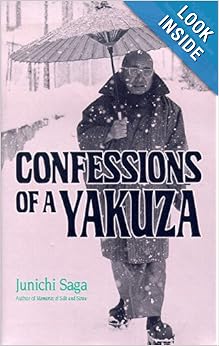
10 Confessions of a Yakuza, Dr. Junichi Saga

In the 2012 Rolling Stone interview Bob Dylan was asked about some lines in songs on Love and Theft that seem to be very close to lines in Saga’s book and Dylan responded: Oh, yeah, in folk and jazz, quotation is a rich and enriching tradition. That certainly is true. It’s true for everybody, but me. I mean, everyone else can do it but not me. There are different rules for me. And as far as Henry Timrod is concerned, have you even heard of him? Who’s been reading him lately? And who’s pushed him to the forefront? Who’s been making you read him? And ask his descendants what they think of the hoopla. And if you think it’s so easy to quote him and it can help your work, do it yourself and see how far you can get. Wussies and pussies complain about that stuff. It’s an old thing – it’s part of the tradition. It goes way back. These are the same people that tried to pin the name Judas on me. Judas, the most hated name in human history! If you think you’ve been called a bad name, try to work your way out from under that. Yeah, and for what? For playing an electric guitar? As if that is in some kind of way equitable to betraying our Lord and delivering him up to be crucified. All those evil motherfuckers can rot in hell.

Seriously?
I’m working within my art form. It’s that simple. I work within the rules and limitations of it. There are authoritarian figures that can explain that kind of art form better to you than I can. It’s called songwriting. It has to do with melody and rhythm, and then after that, anything goes. You make everything yours. We all do it.

-– A Days of the Crazy-Wild blog post: sounds, visuals and/or news –-

Morrissey: ‘I see no difference between eating animals and paedophilia. They are both rape, violence, murder’

Photo via Morrissey’s Facebook page.

In a Q&A on his fan site, True To You, Morrissey goes after meat eaters:

If you have access to You Tube, you should click on to what is called The video the meat industry doesn’t want you to see. If this doesn’t affect you in a moral sense then you’re probably granite. I see no difference between eating animals and paedophilia. They are both rape, violence, murder. If I’m introduced to anyone who eats beings, I walk away. Imagine, for example, if you were in a nightclub and someone said to you “Hello, I enjoy bloodshed, throat-slitting and the destruction of life,” well, I doubt if you’d want to exchange phone numbers…

I would like all governments to be forced to engage an Animal Protectionist MP. I would like a complete zoo and circus ban. I would like every television commercial that promotes ‘flesh-food’ to be followed by a commercial showing how the living pig and the living cow become the supermarket commodity, step by step. I would like the Queen of England to be asked why she wears an electrocuted bear-cub on her head. I would like to ask all so-called celebrity chefs why they believe that animals should have no right to live. If Jamie ‘Orrible is so certain that flesh-food is tasty then why doesn’t he stick one of his children in a microwave? It would taste the same as cooked lamb. The singer Cilla Black recently appeared on television telling us how she was preparing leg of lamb for dinner, and since a lamb is a baby, I wondered what kind of mind Cilla Black could possibly have that would convince her that eating a baby is OK. On another TV program an actor called Jeremy Edwards explained how excited he was at the discovery in Siberia of preserved Woolly Mammoths with enough DNA (flowing blood) to resurrect the animals – which have obviously been extinct for thousands of years. Edwards was excited by this because he said “I’d really like to try a Mammoth burger.” This, alas, is typical of the human idiot. Although the meat industry alone is destroying the planet, I would like to ask President Obama why he says nothing on the subject. Although the meat industry puts an intolerable strain on the medical profession I would like to ask world leaders why they say nothing on the subject. Although meat products are killing off half the human race very speedily, I would like to ask world leaders why they do not care in the least. Money, and only money, makes the world go around. I would also like to ask meat-eaters why they are so certain that animals deserve such barbaric and horrific treatment. I would like to ask meat-eaters why they believe that animals should not have any rights to live their own lives, whilst humans fiercely demand a god-given right to live as they wish simply by reason of their birth alone.

Read the entire Q&A here.

-– A Days of the Crazy-Wild blog post: sounds, visuals and/or news –-

Listen: Del the Funky Homosapien’s Free LP, ‘Iler Than Most’

Photo via Del’s Facebook page.

Del the Funky Homosapien says of this new album, Iler Than Most, which you can listen to below: “Lyrically ill but fun to listen to, nothing super heavy. I did the production on it as well.”

-– A Days of the Crazy-Wild blog post: sounds, visuals and/or news –-

Watch: Patti Smith Rocks ‘Beneath the Southern Cross’ at First Night Boston

Patti Smith on New Year’s Eve via shambhalasun.com. Photo by Joshua Pickering.

On December 31, 2013, Patti Smith and her band performed as part of “First Night Boston” at the Hynes Convention Center Auditorium.

Here they rock out on “Beneath the Southern Cross”:

And “Gloria”:

-– A Days of the Crazy-Wild blog post: sounds, visuals and/or news –-

Watch: Pixies Drop New EP + ‘Blue-Eyed Hexe’ Video

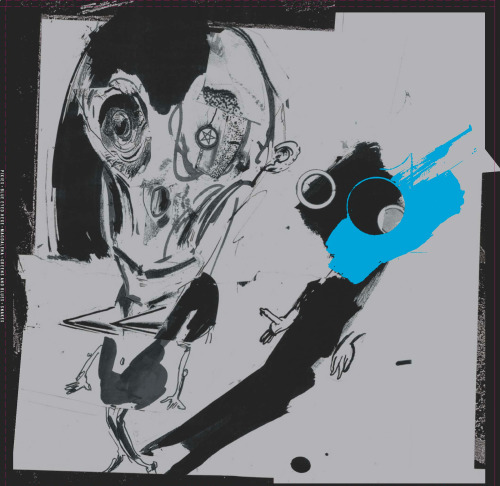
“EP-2” cover art by Vaughan Oliver.

Today the Pixies release “EP-2,” which includes four new songs: “Blue-Eyed Hexe,” “Magdalena,” “Greens and Blues” and “Snakes.”

From the Pixies’ website:

The new songs were recorded during October 2012 at Rockfield Studios in Wales, UK, were produced by Gil Norton, and written by the Pixies. As with the band’s “EP-1” and “Bagboy” track, as well as the Pixies original classic albums, “EP-2” features special artwork designed by Vaughan Oliver at v23. “EP-2” is available exclusively on the band’s website – www.pixiesmusic.com – as a DDL (mp3 only), lossless DDL, limited edition 10-inch vinyl, and as part of special bundles.

*****

Pixies talk about the four new songs on “EP-2”

“Blue-Eyed Hexe”
About this track, Pixies’ Black Francis explained, “It’s a tale from the northwestern part of the UK, and it’s a witch-woman kind of a song. That’s what a ‘hexe’ is, and ours is a blue-eyed hexe.” Guitarist Joey Santiago added, “Gil wanted a swagger, he wanted the guitar solo to sound like you’re going to have sex with this blue-eyed hexe.”

“Magdalena”
“This song is so atmospheric,” remembered Santiago. “We had these weird Moog pedals that sounded like water. It was a very mood-based, atmospheric sound, not based on any lyrics or anything.” Added drummer David Lovering, “One of my favorites, maybe tied with ‘Indie Cindy.’ It’s cool the way it flows, and it’s a very simplistic song, very pretty, cool and moving.”

“Greens and Blues”
Said Black Francis, “As with all my songs, I would prefer people add their own interpretation to it. But, in this case, let’s just say that we had done ‘Gigantic’ as the closer for many years at our reunion shows and it worked really well. But I could see that we were going to grow weary of that and I felt like we basically needed a better ‘Gigantic.’ It was my attempt to come up with another song that would – musically, emotionally and psychologically – sit in the same place that ‘Gigantic’ has sat. Not that I could ever replace that song: you write songs and they come out the way they come out. So perhaps it can be said that this song fills the emotional niche that ‘Gigantic’ occupied, another show-closer. I think the lyric alludes to that, the fact that it’s the end of the night, the end of something. And a separation if you will, between the band and the audience. So I guess it’s kind of a goodbye song, or really more of a ‘good night’ song.

“Snakes”
“I’m not a jammer,” said Santiago, “but Black Francis and I started jamming it out. I had this little idea and I did that sliding guitar just to emulate a snake.” Black Francis adds, “This one was totally written in the studio session. It proved to be a little bit difficult to play and a little bit difficult to record, sonically, but we stuck with it and I like the result.“

-– A Days of the Crazy-Wild blog post: sounds, visuals and/or news –-

Watch: Patti Smith Reads From Book-in-Progress at Poetry Project Benefit

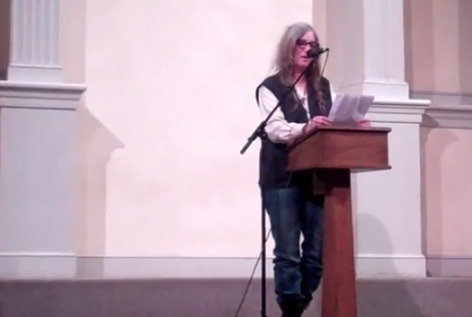
Patti Smith was one of many who read at the 40th Annual New Year’s Day Marathon Reading Benefit at St. Mark’s Church.
Jim Fouratt shot great video which he posted to YouTube.

Below Patti Smith reads a piece called “The List” from a book she’s currently writing — three minute excerpt:

And here are a bunch of other performances from the benefit. The last clip — Tracy Morris and Elliot Sharp — is really terrific:

Phillip Glass:

Justin Sayre:

Joseph Keckler:

Jonas Mekas:

Jennifer Bartlett:

Edwin Torres:

John Giorno:

Lenny Kaye:

Tracy Morris and Elliot Sharp:

-– A Days of the Crazy-Wild blog post: sounds, visuals and/or news –-