On Saturday I was featured on Brian Wise’s Triple R radio show in Australia, “Off the Record,” talking at length about Bob Dylan’s latest album, Shadows In The Night, Dylan’s controversial MusicCares Speech in which he appeared to trash Merle Haggard, and Dennis McNally’s excellent new book, “On Highway 61,” which includes a huge section on Bob Dylan.
The show is available for free streaming. This link will take you right to the section of the show where my conversation with Brian Wise begins.
-– A Days of the Crazy-Wild blog post: sounds, visuals and/or news –-
—
[I published my novel, True Love Scars, in August of 2014.” Rolling Stone has a great review of my book. Read it here. And Doom & Gloom From The Tomb ran this review which I dig. There’s info about True Love Scars here.]
I love Karl Ove Knausgaard’s epic series of novels, My Struggle. Three have thus far been translated into English and I have read them all — and I am well aware that book four will be published and available on April 28 of this year.
I am waiting.
Meanwhile, the New York Times hired Knausgaard to spend ten days in North America, come up with something fresh to say about the U.S. and express whatever he came up with in many thousands of words.
Part two of this multi-part magazine article, “My Saga,” was published today in the New York Times Magazine.
During his time in the U.S., Knausgaard traveled in a rent-a-car with photogrpaher Peter van Agtmael.
I don’t recall anything in Knausgaard’s three books, which are novels and yet are based on his life, about Bob Dylan.
So it was relief, I must say, to learn today that Dylan means something to Knausgaard. A lot I’d say, since he clearly has listened to the six-CD Basement Tapes set released late last year.
Here’s Knausgaard on Bob Dylan and a visit to Dylan’s childhood home in Duluth, Minnesota. (Dylan was born in Duluth and lived there until he was six years old.)
Peter wanted to see Bob Dylan’s childhood home, so we drove there first; it was just a few blocks away, up a steep hill behind the hotel. It looked exactly like all the other houses in the neighborhood, a small wooden duplex with a grassy patch in front. There was no sign indicating that Bob Dylan grew up here, nor was there a statue of him. That seemed appropriate, for in contrast to the other 1960s artists who were still alive, there was nothing about Bob Dylan to remind one of a statue, nothing about his music or his role had become rigid or clearly defined, no final form enclosed him. In fact, it was as if he weren’t really a person at all, but had somehow dissolved into his music. His old songs were constantly in motion, and the new songs emerged from the same stream. As he traveled around, permanently on tour, you couldn’t tell what came from him and what belonged to the American song tradition; he was just playing the music. On “The Basement Tapes,” you can hear how he discovers this mode for the first time, how he begins to live in the music, as he keeps tossing out one tune after the other, song after song, some of it fantastic, some of it junk, some of it interesting, some of it nonsense, and it doesn’t matter in the slightest, for the whole point is the lightness; that all demands for perfection and completion, for flawlessness, have been suspended; and the motion.
All writers, artists and musicians know the feeling: when you disappear into what you are doing, lose yourself in it and are no longer aware that you exist, while at the same time the feeling of existing is profound and total and what you make is never better. Work created in this state really shouldn’t be published in the artist’s name, because it has been created precisely by the artist’s nonpersonal, nonindividual, selfless side. Bob Dylan is the master of the selfless self, the king of the not-one’s-one, a deeply paradoxical figure who lived and breathed the music of this deeply paradoxical country.
“I know it’s idiotic,” Peter said, “but could you take a photo of me in front of his house?”
Afterward, Peter wanted to take some more photos of Duluth and Superior, and I drove slowly over the long bridges that connected them above the port area while he took shot after shot through the open window. The sky was gray, the concrete was gray, the snow that pressed against the side of the road was gray, and the landscape that spread out beneath us, full of warehouses, cranes, silos, fences, access roads and quays, and beyond, enormous factories spewing out smoke — all of this was gray, too. I couldn’t believe this was the same magical place we had seen the previous evening, when we emerged from the dark woods and saw those enormous, blinking red towers stretching toward the sky.
In the daylight, we now saw that they were not towers, not skyscrapers, but simply a row of slender antennas, the very plainest kind, for transmitting radio, phone or TV signals.
-– A Days of the Crazy-Wild blog post: sounds, visuals and/or news –-
—
[I published my novel, True Love Scars, in August of 2014.” Rolling Stone has a great review of my book. Read it here. And Doom & Gloom From The Tomb ran this review which I dig. There’s info about True Love Scars here.]
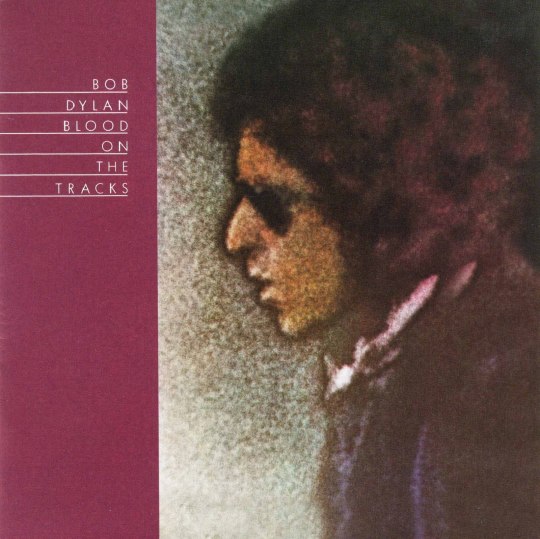
Forty years ago, just after rock critic Jon Landau became Bruce Springsteen’s manager and record producer, his review of Bob Dylan’s Blood On The Tracks appeared in the March 13, 1975 issue of Rolling Stone.
What is most interesting to me about the review, some of which is printed below and the rest of it you can link to, is how, what complains about in critiquing Dylan’s recording style and records — that Dylan makes records too quickly, that he doesn’t use the right musicians, and so on — are the things he made sure Bruce Springsteen didn’t do. What I mean is, Dylan might record an album in a few days and record just two or three takes of a song; Springsteen sometimes would spend a year on a record, recording an infinite number of takes with musicians he worked with for years and years.
Anyway, today we can read Landau’s review of an album that has certainly stood the test of time.
Bob Dylan, Blood On The Tracks
Reviewed by Jon Landau (for Rolling Stone)
Bob Dylan may be the Charlie Chaplin of rock & roll. Both men are regarded as geniuses by their entire audience. Both were proclaimed revolutionaries for their early work and subjected to exhaustive attack when later works were thought to be inferior. Both developed their art without so much as a nodding glance toward their peers. Both are multitalented: Chaplin as a director, actor, writer and musician; Dylan as a recording artist, singer, songwriter, prose writer and poet. Both superimposed their personalities over the techniques of their art forms. They rejected the peculiarly 20th century notion that confuses the advancement of the techniques and mechanics of an art form with the growth of art itself. They have stood alone.
When Charlie Chaplin was criticized, it was for his direction, especially in the seemingly lethargic later movies. When I criticize Dylan now, it’s not for his abilities as a singer or songwriter, which are extraordinary, but for his shortcomings as a record maker. Part of me believes that the completed record is the final measure of a pop musician’s accomplishment, just as the completed film is the final measure of a film artist’s accomplishments. It doesn’t matter how an artist gets there — Robert Johnson, Woody Guthrie (and Dylan himself upon occasion) did it with just a voice, a song and a guitar, while Phil Spector did it with orchestras, studios and borrowed voices. But I don’t believe that by the normal criteria for judging records — the mixture of sound playing, singing and words — that Dylan has gotten there often enough or consistently enough.
Chaplin transcended his lack of interest in the function of directing through his physical presence. Almost everyone recognizes that his face was the equal of other directors’ cameras, that his acting became his direction. But Dylan has no one trait — not even his lyrics — that is the equal of Chaplin’s acting. In this respect, Elvis Presley may be more representative of a rock artist whose raw talent has overcome a lack of interest and control in the process of making records.
Bob Dylan – Tangled Up In Blue (New York Version 1974 Stereo)
Bob Dylan – You’re A Big Girl Now (New York Version)
Bob Dylan – Idiot Wind (New York Version 1974 Stereo)
Bob Dylan – Lily, Rosemary & The Jack Of Hearts (New York Version Stereo 1974)
Bob Dylan – If You See Her, Say Hello (New York Version 1974 Stereo)
-– A Days of the Crazy-Wild blog post: sounds, visuals and/or news –-
—
[I published my novel, True Love Scars, in August of 2014.” Rolling Stone has a great review of my book. Read it here. And Doom & Gloom From The Tomb ran this review which I dig. There’s info about True Love Scars here.]
This week Rolling Stone ran a fascinating interview in two parts with Grateful Dead lyricist Robert Huntrr, who also collaborated on songs with Bob Dylan.
Here’s writer David Browne talking to Hunter about the drugs.
When Jerry was busted in 1985, was it all catching up with him? We all went over once to his house and confronted him, and he opened the door and saw what was going on and said, “Get out of here!” He was trying to shut the door and we all filed in and did the confrontation you could do. And he said he’d do something about it. That’s about all you can do, isn’t it? All I can say is that it more or less ruined everything, having Jerry be a junkie. I remember a time when “junkie” was the nastiest thing Garcia could call anybody. You had such contempt for anybody that would get involved in that.
But what are you going to do when you’re elevated the way he was? He once said, “They’re trying to crucify me, man.” And I said, “Jerry, never mistake yourself for Jesus Christ.” And he really took that advice. He took it hard and well. You’ve got to understand the whole weight of the Grateful Dead scene was on Jerry’s shoulders, to support all the families and everything as well as the audience’s expectations. There were times when I just drove him through the wall.
Then Jerry had his coma in 1986. Jerry was diabetic, and before he had a coma, he was guzzling down fruit juice. It would’ve been better if he was guzzling down brandy. I believe that sugar put Jerry where he was. He was in terrible health — diabetic and taking immense amounts of sugar, and it did what sugar will do to a diabetic and overloaded him into a coma. I remember going in to see him when he was coming out of it, and he was saying, “Am I insane?” And I said, “No, man, you’ve been very, very ill, but you’re fine, you know, you’re coming out of it.” And he said, “I’ve seen the most amazing thing.” He’d been somewhere.
Let’s talk about how you became the Dead’s primary lyricist in 1967. I got pretty deeply into speed and meth and came close to messin’ myself up. The scene I was in, I had to get out of that scene entirely, because as long as it was around I would be tempted, so I went off to New Mexico. And while I was there I had been writing some songs, mostly before I left Palo Alto. I had written “St. Stephen” and “China Cat Sunflower,” and I sent those — and “Alligator” — off to Jerry, and he uncharacteristically wrote back [laughs]. He said they were going to use the songs and why didn’t I come out and be their lyricist? Which I did.
How would you write songs with Garcia?
Jerry didn’t like sitting down by himself and writing songs. He said, “I would rather toss cards in a hat than write songs,” and this was very true. There were situations where he would come over and have melodies and we’d see what we could get out of that. More often I would give him a stack of songs and he’d say, “Oh, God, Hunter! Not again!” He’d throw away what he didn’t like. I’d like to have some of the stuff he tossed out! I don’t know where it went. I wrote once about “cue balls made of Styrofoam” — that line from “Mississippi Half-Step Uptown Toodeloo.” Jerry took objection to the word Styrofoam. He said, “This is so uncharacteristic of your work, to put something as time dated” — or whatever that word would be — “as Styrofoam into it.” I’ve never sung that song without regretting I put that line in. Jerry also didn’t like songs that had political themes to them, and in retrospect I think this was wise, because a lot of the stuff with political themes from those days sounds pretty callow these days.
Fifty-three years ago, on March 11, 1962, Cynthia Gooding’s Folksinger’s Choice radio show featuring Bob Dylan aired on WBAI in New York.
This was Dylan’s first radio interview. His debut album, Bob Dylan, recorded in November 1961, would not be released for another week.
If you haven’t yet heard these performances, now is the time! And if you have, another listen is in order.
I’ve included a transcript of the show below the YouTube clips.
Enjoy!
1 “(I heard That) Lonesome Whistle Blow” (after the song ends if you go to about the seven minute point you can hear some of the interview):
2 “Fixin’ To Die”:
3 “Smokestack Lightning”:
4 “Hard Travellin'”:
5 “The Death Of Emmett Till”:
6 “Standing On The Highway”:
7 “Roll On, John”:
8 “Stealin'”:
9 “It Makes A Long Time Man Feel Bad”:
10 “Baby Please Don’t Go”:
11 “Hard Times In New York”:
Here’s a transcript of the show:
CG: That was Bob Dylan. Just one man doing all that. Playing the … er … mouth harp and guitar because, well, when you do this you have to wear a little sort of, what another person might call a necklace.
BD: Yeah !
CG: And then it’s got joints so that you can bring the mouth harp up to where you can reach it. To play it. Bob Dylan is, well, you must be twenty years old now aren’t you?
BD: Yeah. I must be twenty. (laughs)
CG: (laughs) Are you?
BD: Yeah. I’m twenty, I’m twenty.
CG: When I first heard Bob Dylan it was, I think, about three years ago in Minneapolis, and at that time you were thinking of being a rock and roll singer weren’t you?
BD: Well at that time I was just sort of doin’ nothin’. I was there.
CG: Well, you were studying.
BD: I was working, I guess. l was making pretend I was going to school out there. I’d just come there from south Dakota. That was about three years ago?
CG: Yeah.?
BD: Yeah, I’d come there from Sioux Falls. That was only about the place you didn’t have to go too far to find the Mississippi River. It runs right through the town you know. (laughs).
CG: You’ve been singing … you’ve sung now at Gerdes here in town and have you sung at any of the coffee houses?
BD: Yeah, I’ve sung at the Gaslight. That was a long time ago though. I used to play down in the Wha too. You ever know where that place is?
CG: Yeah, I didn’t know you sung there though.
BD: Yeah, I sung down there during the afternoons. I played my harmonica for this guy there who was singing. He used to give me a dollar to play every day with him, from 2 o’clock in the afternoon until 8.30 at night. He gave me a dollar plus a cheese burger.
CG: Wow, a thin one or a thick one?
BD: I couldn’t much tell in those days.
CG: Well, whatever got you off rock ‘n roll and on to folk music?
BD: Well, I never really got onto this, they were just sort of, I dunno, I wasn’t calling it anything then you know, I wasn’t really singing rock ‘n roll, I was singing Muddy Waters songs and I was writing songs, and I was singing Woody Guthrie songs and also I sung Hank Williams songs and Johnny Cash, I think.
CG: Yeah, I think the ones that I heard were a couple of the Johnny Cash songs.
BD: Yeah, this one I just sang for you is Hank Williams.
CG: It’s a nice song too.
BD: Lonesome Whistle.
CG: Heartbreaking.
BD: Yeah.
CG: And you’ve been writing songs as long as you’ve been singing.
BD: Well no, Yeah. Actually, I guess you could say that. Are these, ah, these are French ones, yeah?
CG: No, they are healthy cigarettes. They’re healthy because they’ve got a long filter and no tobacco.
BD: That’s the kind I need.
CG: And now you’re doing a record for Columbia?
BD: Yeah, I made it already. It’s coming out next month. Or not next month, yeah, it’s coming out in March.
CG: And what’s it going to be called?
BD: Ah, Bob Dylan, I think.
CG: That’s a novel title for a record.
BD: Yeah, it’s really strange.
CG: Yeah and hmm this is one of the quickest rises in folk music wouldn’t you say?
BD: Yeah, but I really don’t think to myself as, a you know, a folk singer, er folk singer thing, er, because I don’t really much play across the country, in any of these places, you know? I’m not on a circuit or anything like that like those other folk singers so ah, I play once in a while you know. But I dunno’ I like more than just folk music too and I sing more than just folk music. I mean as such, a lot of people they’re just folk music, folk music, folk music you know. I like folk music like Hobart Smith stuff an all that but I don’t sing much of that and when I do it’s probably a modified version of something. Not a modified version, I don’t know how to explain it. It’s just there’s more to it, I think. Old time jazz things you know. Jelly Roll Morton, you know, stuff like that.
CG: Well, what I would like is for you to sing some songs, you know, from different parts of your short history. Short because you’re only 20 now.
BD: Yeah, OK. Let’s see. I’m looking for one.
CG: He has the, I gather, a small part of his repertoire, pasted to his guitar.
BD: Yeah. Well, this is you know actually, I don’t even know some of these songs, this list I put on ‘cos other people got it on, you know, and I copied the best songs I could find down here from all these guitar players list. So I don’t know a lot of these, you know. It gives me something to do though on stage.
CG: Yeah, like something to look at.
BD: Yeah. I’ll sing you, oh, you wanna hear a blues song?
CG: Sure.
BD: This one’s called Fixin’ To Die.
Track 2: Fixin’ To Die
CG: That’s a great song. How much of it is yours?
BD: That’s ah, I don’t know. I can’t remember. My hands are cold; it’s a pretty cold studio.
CG: It s the coldest studio !
BD: Usually can do this (picking a few notes). There, I just wanted to do it once.
CG: You’re a very good friend of John Lee Hookers, aren’t you?
BD: Yeah, I’m a friend of his.
CG: Do you sing any of his songs at all?
BD: Well, no I don’t sing any of his really. I sing one of Howlin’ Wolfs. You wanna hear that one again?
CG: Well, first I wanna ask you, um, why you don’t sing any of his because I know you like them.
BD: I play harmonica with him, and I sing with him. But I don’t do, sing, any of his songs because, I might sing a version of one of them, but I don’t sing any like he does, ‘cos I don’t think anybody sings any of his songs to tell you the truth. He’s a funny guy to sing like.
CG: Hard guy to sing like too.
BD: This is, I’ll see if I can find a key here and do this one. I heard this one a long time ago. This is one, I never do it.
CG: This is the Howlin’ Wolf song
BD: Yeah.
Track 3: Smokestack Lightning
BD: You like that?
CG: Yeah, I sure do. You’re very brave to try and sing that kind of a howling song.
BD: Yeah, it’s Howlin’ Wolf.
CG: Yeah. Another of the singers that you’re a very good friend of is, I know, Woody Guthrie.
BD: Yeah.
CG: Did you, you said er singing his songs, or rather his songs were some of the first ones that you sang.
BD: Yeah.
CG: Which ones did you sing of his?
BD: Well, I sing…
CG: Or which do you like the best perhaps I should say.
BD: Well, which ones you’re gonna hear. Here, I’ll sing you one, if I get it together here.
CG: In order for Bob to put on his necklace which is what he holds up the mouth harp with, he’s gotta take his hat off. Then he puts on the necklace. Then he puts the hat back on.
BD: Yeah.
CG: Then he screws up the necklace so he can put the mouth harp in it. It’s a complicated business.
BD: You know, the necklace gotta go round the collar.
CG: Also, in case any of you don’t know, in order for Bob to decide what key he’s gonna sing in, he gotta, well, first, he decides what key he s gonna sing in and then he’s gotta find the mouth harp that’s in that key. And, then he’s gotta put the mouth harp in the necklace.
BD: Yeah. I’ll sing you Hard Travellin’. How’s that one? Everybody sings it, but he likes that one.
Track 4: Hard Travellin’
CG: Nice, you started off slow but boy you ended up.
BD: Yeah, that’s a thing of mine there.
CG: Tell me about the songs that you’ve sung, that you’ve written yourself that you sing.
BD: Oh those are … I don’t claim to call them folk songs or anything. I just call them contemporary songs, I guess. You know, there’s a lot of people paint, you know. If they’ve got something that they wanna say, you know, they paint. Or other people write. Well, I just, you know write a song it’s the same thing . You wanna hear one?
CG: Why, yes. That’s just what I had in mind Bob Dylan. Whatever made you think of that.
BD: Well, let me see. What kind do you wanna hear? I got a new one I wrote.
CG: Yeah. you said you were gonna play some of your new ones for me.
BD: Yeah, I got a new one, er. This one’s called, em, Emmett Till. Oh, by the way, the melody here is, excuse me, the melody’s, I stole the melody from Len Chandler. An’ he’s a funny guy. He’s a, he’s a folk singer guy. He uses a lot of funny chords you know when he plays and he’s always getting to, want me, to use some of these chords, you know, trying to teach me new chords all the time. Well, he played me this one. Said don’t those chords sound nice? An’ I said they sure do, an so I stole it, stole the whole thing.
CG: That was his first mistake.
BD: Yeah … Naughty tips.
Track 5: Emmett Till
BD: You like that one?
CG: It’s one of the greatest contemporary ballads I’ve ever heard. It s tremendous.
BD: You think so?
CG: Oh yes !
BD: Thanks !
CG: It’s got some lines that are just make you stop breathing, great. Have you sung that for Woody Guthrie?
BD: No. I’m gonna sing that for him next time.
CG: Gonna sing that one for him?
BD: Yeah.
CG: Oh Yeah.
BD: I just wrote that one about last week, I think.
CG: Pine song. It makes me very proud. It’s uh, what’s so magnificent about it to me, is that it doesn’t have any sense of being written, you know. It sounds as if it just came out of …. it doesn’t have any of those little poetic contortions that mess up so many contemporary ballads, you know.
BD: Oh yeah, I try to keep it working.
CG: Yeah, and you sing it so straight. That’s fine.
BD: Just wait til’ Len Chandler hears the melody though.
CG: He’ll probably be very pleased with what you did to it. What song does he sing to it?
BD: He sings another one he wrote, you know. About some bus driver out in Colorado, that crashed a school bus with 27 kids. That’s a good one too. It’s a good song.
CG: What other songs are you gonna sing?
BD: You wanna hear another one?
CG: I wanna hear tons more.
BD: OK, I’ll sing ya, I never get a chance to sing a lot of, let me sing you just a plain ordinary one.
CG: Fine.
BD: I’ll tune this one. It’s open E. Oh ! I got one, I got two of ’em. I broke my fingernail so it might not be so, it might slip a few times.
Track 6: Standing On The Highway
BD: You like that?
CG: Yes I do. You know the eight of diamonds is delay, and the ace of spades is death so that sort of goes in with the two roads, doesn’t it?
BD: I learned that from the carnival.
CG: From who?
BD: Carnival, I used to travel with the carnival. I used to speak of those things all the time.
CG: Oh. You can read cards too?
BD: Humm, I can’t read cards. I really believe in palm reading, but for a bunch of personal things, I don’t, personal experiences, I don’t believe too much in the cards. I like to think I don’t believe too much in the cards, anyhow.
CG: So you go out of your way not to get em read, so you won’t believe them. How long were you with the carnival?
BD: I was with the carnival off and on for about six years.
CG: What were you doing?
BD: Oh, just about everything. Uh, I was clean-up boy, I used to be on the main line, on the ferris wheel, uh, do just run rides. I used to do all kinds of stuff like that.
CG: Didn’t that interfere with your schooling?
BD: Well, I skipped a bunch of things, and I didn’t go to school a bunch of years and I skipped this and I skipped that.
CG: That’s what I figured.
BD: All came out even though.
CG: What, you were gonna … you were gonna, sing another blues, you said.
BD: Oh yeah, I’ll sing you this one. This is a nice slow one. I learned this … you know Ralph Rensler?
CG: Sure.
BD: I learned this sort of thing from him. A version of this, I got the idea from him. This isn’t the blues, but, how much time we got?
CG: Oh, we got half an hour.
BD: Oh, good.
Track 7: Roll On John
CG: That’s a lonesome accompaniment too. Oh my !
BD: You like that one?
CG: It makes you feel even lonelier. How much of that last one was yours by the way?
BD: Well, I dunno, maybe one or two verses.
CG: Where’d the rest of it come from?
BD: Well, like I say, I got the idea for Roll On John from Ralph Rensler.
CG: Oh! I see.
BD: And then I got … the rest just sort of fell together. Here’s one, I’ll bet you’ll remember. Yay, I bet you’ll know this one.
CG: Take the hat off, put on the necklace, put the hat back on. Nobody’s ever seen Bob Dylan without his hat excepting when he’s putting on his necklace. Is there … is there a more dignified name for that thing?
BD: What, the, this?
CG: Yeah the brace, what’s it called?
BD: Er, harmonica holder.
CG: Oh, I think necklace is better than that.
BD: Yeah, ha ha. This one here’s an old jug band song.
Track 8: Stealin’
BD: Like that? That’s called Stealin’.
CG: I figured. You haven’t been playing the harrnonica too long, have you?
BD: Oh yeah, oh yeah, yeah, yeah. I been playing the harmonica for a long time. I just have never had … couldn’t play ’em at the same time. I used to play the smaller Hohners. I never knew harmonica holders existed, the real kind like this. I used to go ahead and play with the coat hanger. That never really held out so good. I used to put tape around it, you know, and then it would hold out pretty good. But then there were smaller harmonicas than these, you know, they’re about this far an’ I used to put them in my mouth. But I, but I got bad teeth, you know, and some kind of thing back there you know. Maybe there’s … I don’t know what it was, a filling or something. I don’t know what it was in there but it used to magnify.
CG: Oh yes.
BD: Not magnified but magnet, you know. Man, this whole harmonica would go, you know, wham, drop from my mouth like that. So I couldn’t hold it onto my teeth very much.
CG: Yeah, it’s like, sometimes you get a piece of tin foil in your mouth and it goes wow. It’s terrible. But let’s not talk about that.
BD: No, I don’t want to talk about that either.
CG: At the carnival did you learn songs?
BD: No, I learned how to sing though. That’s more important.
CG: Yeah. You made up the songs even then.
BD: Er, actually, I wrote a song once. I’m trying to find, a real good song I wrote. An’ it’s about this lady I knew in the carnival. An’ er, they had a side show, I only, I was, this was, Thomas show, Roy B Thomas shows, and there was, they had a freak show in it, you know, and all the midgets and all that kind of stuff. An’ there was one lady in there really bad shape. Like her skin had been all burned when she was a little baby, you know, and it didn’t grow right, and so she was like a freak. An’ all these people would pay money, you know, to come and see and … er … that really sort of got to me, you know. They’d come and see, and I mean, she was very, she didn’t really look like normal, she had this funny kind of skin and they passed her of as the elephant lady. And, er, like she was just burned completely since she was a little baby, er.
And … er, it’s a funny thing about them: I know how these people think, you know. Like when they wanna sell you stuff, you know, the spectators. And I don’t see why people don’t buy something, because, you know, like they sell little cards of themselves for, you know, like ten cents, you know. They got a picture on it and it’s got some story, you know. And they’ve very funny thinking, like they get up there like, a lot of them are very smart, you know, because they’ve had to do this, I mean, still you can’t. A lot of them are great people, you know. But like, they got a funny thing in their minds. Like they want to. Here they are on the stage, they wanna make you have two thoughts. Like, they wanna make you think that, er, they don’t feel, er, bad about themselves. They want you to think that they just go on living everyday and they don’t ever think about their, what’s bothering them, they don’t ever think about their condition. An’ also they wanna make you feel sorry for them, an’ they gotta do that two ways you see And er … they do it, a lot of them do it. And … er, it’s er. I had a good friend, this woman who was like that, and I wrote a song for her, you know, a long time ago. An’ lost it some place. It’s just about, just speakin’ from first person, like here I am, you know, and sort a like, talkin’ to you, and trying, an’ it was called, “Won’t You Buy A Postcard”. That’s the name of the song I wrote. Can’t remember that one though.
CG: There’s a lot of circus literature about how freaks don’t mind being freaks but it’s very hard to believe.
BD: Oh yeah.
CG: You’re absolutely right, that they would have to look at it two ways at the same time. Did you manage to get both ways into the song?
BD: Yeah. I lost the song.
CG: I hope you fond it and when you find it sing it for me.
BD: I got a verse here of some… You know Ian and Silvia?
CG: Oh sure. Ian and Silvia are at the Bitter End Club.
BD: I sort of borrowed this from them.
CG: He’s looking for a harmonica.
BD: I don’t have to take the necklace off; necklace as you call it. You might have heard them do it. This is the same song. I used to do this one.
Track 9: Makes A Long Time Man Feel Bad
BD: Got sort of… You like that one?
CG: Boy it, when you…
BD: That’s got them funny chords in it.
CG: …really get going there’s a tremendous sort of push that you give things that’s wild.
BD: Oh, you really think so?
CG: No, I was just talking.
BD: I’ll take off my necklace.
CG: Without taking off your hat.
BD: No.
CG: Well, then the thing is you see that …
BD: I’m getting good at this.
CG: Yah. After he takes off the necklace or puts it on he’s gotta fluff up the hat again every time.
BD: Yeah. I got it cleaned and blocked last week.
CG: What did you wear on your head? (laughing)
BD: Stetson. You seen me wear that Stetson.
CG: Oh yeah, you were wearing somebody’s Stetson.
BD: It was mine. I got that for a present.
CG: So why don’t you wear it? ‘Cause you like this one better?
BD: I like this one better. It’s been with me longer.
CG: What happens when you take it off for any length of time? You go to sleep?
BD: Yeah.
CG: I see.
BD: Or else I’m in the bathroom or somethin’. Well actually just when I go to sleep. I wanted to sing Baby Please Don ‘t Go because I’ve wanted to hear how that sounded.
Track 10; Baby Please Don’t Go
CG: That’s a nice song too. You said that you’ve written several new songs lately.
BD: Yeah.
CG: You’ve only sung one of them. You realise that? I know I’m working you very hard for this hour of the morning, but there it is.
BD: Yeah, this really isn’t a new one but this is one of the ones. You’ll like it. I wrote this one before I got this Columbia Records thing. Just about when I got it, you know. I like New York, but this is a song from one person’s angle.
Track 11: Hard Times In New York Town
CG: That’s a very nice song, Bob Dylan. You’ve been listening to Bob Dylan playing some, playing and singing some of his songs and some of the songs that he’s learned from other people. And thank you very, very much for coming down here and working so hard.
BD: It’s my pleasure to come down.
CG: When you’re rich and famous are you gonna wear the hat too?
BD: Oh, I’m never gonna become rich and famous.
CG: And you’re never gonna take off the hat either.
BD: No.
CG: And this has been Folksingers Choice and I’m Cynthia Gooding. I’ll be here next week at the same time.
Transcript via Expecting Rain. Thanks!!!
-– A Days of the Crazy-Wild blog post: sounds, visuals and/or news –-
—
[I published my novel, True Love Scars, in August of 2014.” Rolling Stone has a great review of my book. Read it here. And Doom & Gloom From The Tomb ran this review which I dig. There’s info about True Love Scars here.]
Forty-nine years ago, at Columbia Music Row Studios in Nashville, Bob Dylan, some of Nashville’s top session musicians, who along with Al Kooper and Robbie Robertson worked on Blonde On Blonde, recorded two songs: “Most Likely You Go Your Way (And I’ll Go Mine)” and “Temporary Like Achilles.”
The second song, “Temporary Like Achilles,” had evolved from a song called “Medicine Sunday,” also known as “Midnight Train,” that Dylan and the Hawks cut at the first of the Blonde On Blonde sessions at Columbia Studio A in New York on October 5, 1965. A portion of the song can be heard below.
Dylan was arguably at his creative peak while writing and recording Blonde On Blonde. He was supremely confident of his abilities, writing songs while touring and when he wasn’t in the studio recording.
Most of the songs on Blonde On Blonde are, at least to some degree, about relationships, some of which, like the one in “Most Likely You Go Your Way (And I’ll Go Mine)” went seriously wrong. All of the lyrics to that song are superb, but this verse is classic:
You say you’re sorry
For tellin’ stories
That you know I believe are true
You say ya got some
Other kinda lover
And yes, I believe you do
You say my kisses are not like his
But this time I’m not gonna tell you why that is
I’m just gonna let you pass
Yes, and I’ll go last
Then time will tell who fell
And who’s been left behind
When you go your way and I go mine
The relationship described in “Temporary Like Achilles” is just as bad, with many great lines. This one, in particular, nails it:
But is your heart made out of stone, or is it lime
Or is it just solid rock?
Listen to both songs below, as well as a portion of “Medicine Sunday.”
“Most Likely You Go Your Way (And I’ll Go Mine)”:
First song is a 1974 live version of “Most Likely You Go Your Way (And I’ll Go Mine)” from the Dylan/The Band tour:
Official video (this is a weird one). According to Wikipedia, “Mark Ronson reworked and remixed the song in promotion for Dylan’s 2007 compilation Dylan.”:
“Temporary Like Achilles”:
“Medicine Sunday”:
“Most Likely You Go Your Way (And I’ll Go Mine)” lyrics:
You say you love me
And you’re thinkin’ of me
But you know you could be wrong
You say you told me
That you wanna hold me
But you know you’re not that strong
I just can’t do what I done before
I just can’t beg you anymore
I’m gonna let you pass
And I’ll go last
Then time will tell just who fell
And who’s been left behind
When you go your way and I go mine
You say you disturb me
And you don’t deserve me
But you know sometimes you lie
You say you’re shakin’
And you’re always achin’
But you know how hard you try
Sometimes it gets so hard to care
It can’t be this way ev’rywhere
And I’m gonna let you pass
Yes, and I’ll go last
Then time will tell just who fell
And who’s been left behind
When you go your way and I go mine
The judge, he holds a grudge
He’s gonna call on you
But he’s badly built
And he walks on stilts
Watch out he don’t fall on you
You say you’re sorry
For tellin’ stories
That you know I believe are true
You say ya got some
Other kinda lover
And yes, I believe you do
You say my kisses are not like his
But this time I’m not gonna tell you why that is
I’m just gonna let you pass
Yes, and I’ll go last
Then time will tell who fell
And who’s been left behind
When you go your way and I go mine
Standing on your window, honey
Yes, I’ve been here before
Feeling so harmless
I’m looking at your second door
How come you don’t send me no regards?
You know I want your lovin’
Honey, why are you so hard?
Kneeling ’neath your ceiling
Yes, I guess I’ll be here for a while
I’m tryin’ to read your portrait, but
I’m helpless, like a rich man’s child
How come you send someone out to have me barred?
You know I want your lovin’
Honey, why are you so hard?
Like a poor fool in his prime
Yes, I know you can hear me walk
But is your heart made out of stone, or is it lime
Or is it just solid rock?
Well, I rush into your hallway
Lean against your velvet door
I watch upon your scorpion
Who crawls across your circus floor
Just what do you think you have to guard?
You know I want your lovin’
Honey, but you’re so hard
Achilles is in your alleyway
He don’t want me here, he does brag
He’s pointing to the sky
And he’s hungry, like a man in drag
How come you get someone like him to be your guard?
You know I want your lovin’
Honey, but you’re so hard
-– A Days of the Crazy-Wild blog post: sounds, visuals and/or news –-
—
[I published my novel, True Love Scars, in August of 2014.” Rolling Stone has a great review of my book. Read it here. And Doom & Gloom From The Tomb ran this review which I dig. There’s info about True Love Scars here.]
Recently – February 23, 2015 – Ben Gibbard performed a set at Noise Pop with the help of the brilliant Mark Kozelek and Death Cab touring keyboardist Zac Rae.
Here are three songs they did that night.
“Black Sun”:
“Such Great Heights”:
“No Room In Frame”:
-– A Days of the Crazy-Wild blog post: sounds, visuals and/or news –-
—
[I published my novel, True Love Scars, in August of 2014.” Rolling Stone has a great review of my book. Read it here. And Doom & Gloom From The Tomb ran this review which I dig. There’s info about True Love Scars here.]
The Welsh pop-punk combo Joanna Gruesome won me over with their inspiring 2013 debut, Weird Sister.
Their second album, Peanut Butter, is due June 2, 2015.
Check out two tracks from the album:
“Honestly Do Yr Worst”:
“Last Year”:
Peanut Butter tracklist:
01 “Last Year”
02 “Jamie (Luvver)”
03 “Honestly Do Yr Worst”
04 “There Is No Function Stacy”
05 “Crayon”
06 “I Don’t Wanna Relax”
07 “Jerome (Liar)”
08 “Separate Bedrooms”
09 “Psykick Espionage”
10 “Hey! I Wanna Be Yr Best Friend”
-– A Days of the Crazy-Wild blog post: sounds, visuals and/or news –-
—
[I published my novel, True Love Scars, in August of 2014.” Rolling Stone has a great review of my book. Read it here. And Doom & Gloom From The Tomb ran this review which I dig. There’s info about True Love Scars here.]
Tracy Phillips in Dylan video for “The Night We Called It A Day”
It’s only been in the past week that the news that Dylan has recorded a second album of standards has made headlines. And yet we’ve actually known that a second album’s worth of material was recorded since early January.
Why the delay?
Slightly over two months ago, I posted that Al Schmitt, the recording engineer for the Dylan Shadows in The Night sessions, had said in an interview that Dylan had recorded enough songs – 23 in total that had been previously recorded by Frank Sinatra — for two albums. And in that interview Schmitt referred to Shadows in The Night as “this first album,” implying that there would be a second.
The video interview with Schmitt appeared on YouTube on January 4, 2015.
Although the interviewer, Stephen Peeples, planned a wide-ranging conversation covering Schmitt’s long career working with Frank Sinatra, Henry Mancini, Cal Tjader, Al Hirt, Rosemary Clooney, Liverpool Five, The Astronauts, Sam Cooke, Steely Dan, Neil Young and many more, almost immediately they started talking about the latest album Schmitt had completed: Shadows In The Night.
During that interview we learned two key facts. Although Shadows In The Night would include ten songs, Dylan had actually recorded more than twice that many songs.
“It worked great, and overall we did 23 songs,” Schmidt said. “Only 10 are on this first album.”
When Peeples asked Schmidt about a second album, Schmidt seemed to back off that he had previously implied.
“I have no idea, I don’t know,” Schmitt said. “I have no idea. And with Bob… He won’t tell you [laughs].”
We also learned from Schmitt that all the songs were “a re-interpretation of songs that Frank Sinatra did in the ‘40s and early ‘50s, although as it turned out one, “Stay With Me,” was written in 1963, one, “Where Are You?,” was written in 1937 and one, “What’ll I Do?,” was written in 1923.
In his ARRP interview it seemed that Dylan tried to downplay the fact that Shadows In The Night is an album of songs previously recorded by Frank Sinatra, but according to Schmidt, that’s exactly what it is.
“It’s a re-interpretation of songs that Frank Sinatra did in the ‘40s and early ‘50s,” Schmidt said.
And Schmidt explained: “He would listen to the songs over and over and get Sinatra’s intention on what he was doing with the song. Then he would only do two or three takes on each tune, but he would make it his own. It had nothing to do with Sinatra. He’d just learn what the song was about and whatever. It was an interesting way to work. It was a lot of fun.”
“He came to my house eight or six months ago and spent a few hours,” Lanois told the Vancouver Sun. “We listened to 21 songs — because he’s made two records of this (Sinatra project). And he said, ‘Let me tell you, Dan: If you have the time, can I tell you how I grew up?’ So we sat in the kitchen. I hadn’t heard a note.
“He spoke for an hour and a half on how, as a kid, you couldn’t even get pictures of anybody. You might get a record but you didn’t know what they looked like. So there was a lot of mystery associated with the work at the time. As far as hearing live music, he only heard a couple of shows a year, like the Tommy Dorsey Orchestra might come through.
“But the music he did hear really touched him and he felt that a lot of that music was written not only by great professional songwriters at the time, but a lot of it was written from the heart, from the wartime, and people just pining for a lover. He felt there was a lot of spirit in that music. He felt there was a kind of beauty, a sacred ground for him.
“After having said all that, we then listened to the music and I felt everything that he talked about. For one of America’s great writers to say, ‘I’m not gonna write a song. I’m gonna pay homage to what shook me as young boy,’ I thought was very graceful and dignified.”
So far Dylan’s publicists have not confirmed that there will be a second album.
-– A Days of the Crazy-Wild blog post: sounds, visuals and/or news –-
—
[I published my novel, True Love Scars, in August of 2014.” Rolling Stone has a great review of my book. Read it here. And Doom & Gloom From The Tomb ran this review which I dig. There’s info about True Love Scars here.]
Here are nine things I learned from Bob Dylan’s AARP interview.
1) Bob Dylan listened to tons of big band music as a kid:
“Early on, before rock ‘n’ roll, I listened to big band music: Harry James, Russ Columbo, Glenn Miller. Singers like Jo Stafford, Kay Starr, Dick Haymes. Anything that came over the radio and music played by bands in hotels that our parents could dance to. We had a big radio that looked like a jukebox, with a record player on the top.”
2) Bob Dylan thinks the access to most of recorded music that the Internet now makes possible is a negative:
“Well, if you’re just a member of the general public, and you have all this music available to you, what do you listen to? How many of these things are you going to listen to at the same time? Your head is just going to get jammed — it’s all going to become a blur, I would think. Back in the day, if you wanted to hear Memphis Minnie, you had to seek a compilation record, which would have a Memphis Minnie song on it. And if you heard Memphis Minnie back then, you would just accidentally discover her on a record that also had Son House and Skip James and the Memphis Jug Band. And then maybe you’d seek Memphis Minnie in some other places — a song here, a song there. You’d try to find out who she was. Is she still alive? Does she play? Can she teach me anything? Can I hang out with her? Can I do anything for her? Does she need anything? But now, if you want to hear Memphis Minnie, you can go hear a thousand songs. Likewise, all the rest of those performers, like Blind Lemon [Jefferson]. In the old days, maybe you’d hear “Matchbox” and “Prison Cell Blues.” That would be all you would hear, so those songs would be prominent in your mind. But when you hear an onslaught of 100 more songs of Blind Lemon, then it’s like, “Oh man! This is overkill!” It’s so easy you might appreciate it a lot less.”
3) Bob Dylan is such a fan of Picasso he’d like to be him – maybe:
“Well, I might trade places with Picasso if I could, creatively speaking. I’d like to think I was the boss of my creative process, too, and I could just do anything I wanted whenever I wanted and it would all be on a grand scale. But of course, that’s not true. Like Sinatra, there was only one Picasso.”
4) Bob Dylan’s take on creativity:
“[Creativity is] uncontrollable. It makes no sense in literal terms. I wish I could enlighten you, but I can’t — just sound stupid trying. But I’ll try. It starts like this. What kind of song do I need to play in my show? What don’t I have? It always starts with what I don’t have instead of doing more of the same. I need all kinds of songs — fast ones, slow ones, minor key, ballads, rumbas — and they all get juggled around during a live show. I’ve been trying for years to come up with songs that have the feeling of a Shakespearean drama, so I’m always starting with that. Once I can focus in on something, I just play it in my mind until an idea comes from out of nowhere, and it’s usually the key to the whole song. It’s the idea that matters. The idea is floating around long before me. It’s like electricity was around long before Edison harnessed it. Communism was around before Lenin took over. Pete Townshend thought about Tommy for years before he actually wrote any songs for it. So creativity has a lot to do with the main idea. Inspiration is what comes when you are dealing with the idea. But inspiration won’t invite what’s not there to begin with.”
5) Bob Dylan believes “self-sufficiency creates happiness”:
“OK, a lot of people say there is no happiness in this life, and certainly there’s no permanent happiness. But self-sufficiency creates happiness. Happiness is a state of bliss. Actually, it never crosses my mind. Just because you’re satisfied one moment — saying yes, it’s a good meal, makes me happy — well, that’s not going to necessarily be true the next hour. Life has its ups and downs, and time has to be your partner, you know? Really, time is your soul mate. Children are happy. But they haven’t really experienced ups and downs yet. I’m not exactly sure what happiness even means, to tell you the truth. I don’t know if I personally could define it. [Happiness is] like water — it slips through your hands. As long as there’s suffering, you can only be so happy. How can a person be happy if he has misfortune? Does money make a person happy? Some wealthy billionaire who can buy 30 cars and maybe buy a sports team, is that guy happy? What then would make him happier? Does it make him happy giving his money away to foreign countries? Is there more contentment in that than giving it here to the inner cities and creating jobs? Nowhere does it say that one of the government’s responsibilities is to create jobs. That is a false premise. But if you like lies, go ahead and believe it. The government’s not going to create jobs. It doesn’t have to. People have to create jobs, and these big billionaires are the ones who can do it. We don’t see that happening. We see crime and inner cities exploding, with people who have nothing to do but meander around, turning to drink and drugs, into killers and jailbirds. They could all have work created for them by all these hotshot billionaires. For sure, that would create a lot of happiness. Now, I’m not saying they have to — I’m not talking about communism — but what do they do with their money? Do they use it in virtuous ways? If you have no idea what virtue is all about, look it up in a Greek dictionary. There’s nothing namby-pamby about it.
6) Bob Dylan thinks Billy Graham, the evangelist, was “like rock ’n’ roll personified”:
When I was growing up, Billy Graham was very popular. He was the greatest preacher and evangelist of my time — that guy could save souls and did. I went to two or three of his rallies in the ’50s or ’60s. This guy was like rock ’n’ roll personified — volatile, explosive. He had the hair, the tone, the elocution — when he spoke, he brought the storm down. Clouds parted. Souls got saved, sometimes 30- or 40,000 of them. If you ever went to a Billy Graham rally back then, you were changed forever. There’s never been a preacher like him. He could fill football stadiums before anybody. He could fill Giants Stadium more than even the Giants football team. Seems like a long time ago. Long before Mick Jagger sang his first note or Bruce strapped on his first guitar — that’s some of the part of rock ’n’ roll that I retained. I had to. I saw Billy Graham in the flesh and heard him loud and clear.
7) These days Bob Dylan can relate more to a song like “I’m A Fool To Want You” than to his own “Queen Jane Approximately”:
“These songs [on Shadows In The Night] have been written by people who went out of fashion years ago. I’m probably someone who helped put them out of fashion. But what they did is a lost art form. Just like da Vinci and Renoir and van Gogh. Nobody paints like that anymore either. But it can’t be wrong to try. So a song like “I’m a Fool to Want You” — I know that song. I can sing that song. I’ve felt every word in that song. I mean, I know that song. It’s like I wrote it. It’s easier for me to sing that song than it is to sing, “Won’t you come see me, Queen Jane.” At one time that wouldn’t have been so. But now it is. Because “Queen Jane” might be a little bit outdated. It can’t be outrun. But this song is not outdated. It has to do with human emotion, which is a constant thing. There’s nothing contrived in these songs. There’s not one false word in any of them. They’re eternal, lyrically and musically.”
8) Bob Dylan clearly understands what recording an album of standards, Shadows in The Night, means — that in a way he is making peace with a music that, as he puts it, “rock ’n’ roll came to destroy”:
“To those of us who grew up with these kinds of songs and didn’t think much of it, these are the same songs that rock ’n’ roll came to destroy — music hall, tangos, pop songs from the ’40s, fox-trots, rumbas, Irving Berlin, Gershwin, Harold Arlen, Hammerstein. Composers of great renown.”
9) Dylan is asked if Frank Sinatra was “too square to admit liking” back in the late ’50s/’60s:
“Square? I don’t think anybody would have been bold enough to call Frank Sinatra square. Kerouac listened to him, along with Bird [Charlie Parker] and Dizzy [Gillespie]. But I myself never bought any Frank Sinatra records back then, if that’s what you mean. I never listened to Frank as an influence. All I had to go on were records, and they were all over the place, orchestrated in one way or another. Swing music, Count Basie, romantic ballads, jazz bands — it was hard to get a fix on him. But like I say, you’d hear him anyway. You’d hear him in a car or a jukebox. You were conscious of Frank Sinatra no matter what age you were. Certainly nobody worshipped Frank Sinatra in the ’60s like they did in the ’40s. But he never went away. All those other things that we thought were here to stay, they did go away. But he never did.”
Frank Sinatra, “Ebb Tide”:
-– A Days of the Crazy-Wild blog post: sounds, visuals and/or news –-
—
[I published my novel, True Love Scars, in August of 2014.” Rolling Stone has a great review of my book. Read it here. And Doom & Gloom From The Tomb ran this review which I dig. There’s info about True Love Scars here.]